
Cleaning your refrigerator coils is one of the best things you can do for efficiency and lifespan. But sometimes homeowners notice something unexpected right after: the fridge runs louder after cleaning coils.
You might hear more humming, buzzing, or airflow noise than before. While that can feel like something went wrong, it’s often a normal or temporary side effect of cleaning—or a small issue that’s easy to fix.
Let’s go through the most common reasons your refrigerator got louder and what you can do about it.
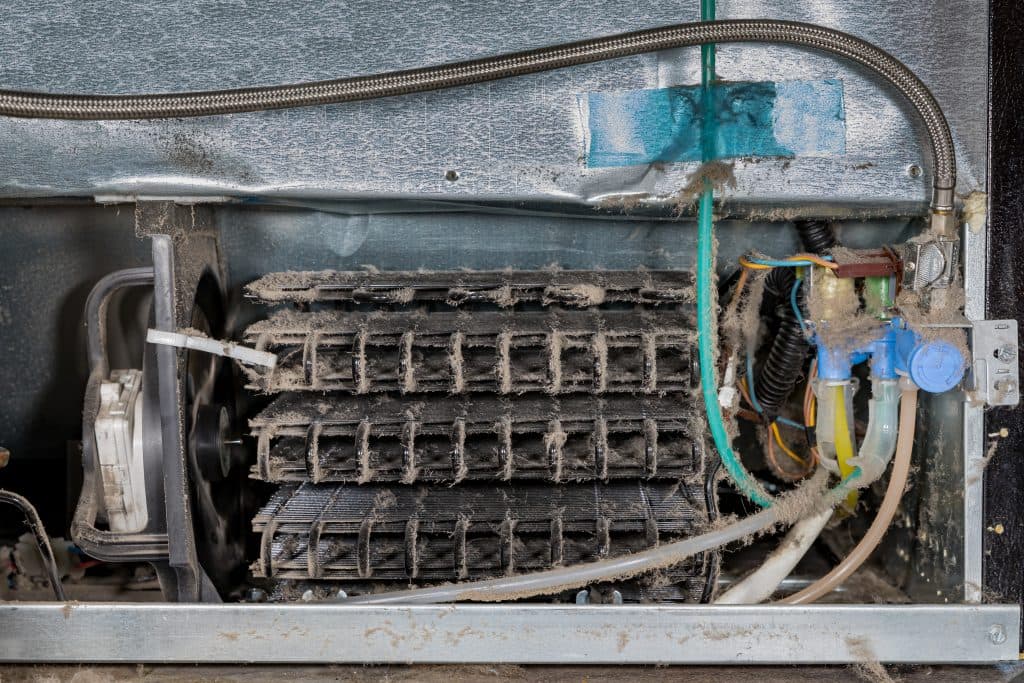
1. The Fridge Is Working More Efficiently Now
This might sound counterintuitive, but after cleaning the coils, your fridge may actually be running better—and that can sound louder.
Dirty coils restrict heat transfer. When they’re clean:
- The compressor cycles more effectively
- Fans move air more freely
- Cooling happens faster
This can make normal operating sounds more noticeable, especially if you were used to a quieter but less efficient system.
In many cases, the sound stabilizes after a day or two.
2. Dust May Have Been Moved Into the Fan Area
When cleaning coils, dust can shift into nearby components—especially the condenser fan.
If dust gets into the fan blades:
- Airflow becomes uneven
- The fan may make a louder whirring sound
- You may hear intermittent noise
What to do:
- Unplug the fridge
- Carefully inspect the fan area
- Remove any visible debris
Even a small amount of dust can affect noise levels.
3. The Fridge May Have Been Moved Slightly
During coil cleaning, it’s common to pull the fridge away from the wall.
When you push it back, even a small shift can cause:
- Uneven leveling
- Vibration against the floor
- Contact with the wall or cabinets
This often leads to:
- Rattling or humming sounds
- Noise that changes when you touch the fridge
Fix:
- Ensure the fridge is level
- Leave a small gap (about 1–2 inches) from the wall
- Adjust leveling feet if needed
4. Panels or Covers May Not Be Reattached Properly
If you removed a back or bottom panel to access the coils, it may not be fully secured after reinstallation.
Loose panels can:
- Vibrate when the compressor runs
- Amplify normal operating sounds
- Create buzzing or rattling noise
Double-check that all screws and clips are tight.
5. The Condenser Fan May Be Running More Often
With clean coils, your fridge can cool more efficiently—but it may also cycle differently.
The fan may:
- Run at higher speed temporarily
- Turn on more frequently
- Sound more noticeable in quiet environments
This is usually normal and stabilizes over time.
6. Cleaning May Have Exposed an Existing Issue
Sometimes cleaning doesn’t cause the noise—it just reveals a problem that was already there.
For example:
- A slightly worn fan motor becomes louder
- A loose component starts vibrating
- A failing compressor becomes more noticeable
If the noise is:
- Very loud
- Metallic or grinding
- Getting worse over time
…it may require professional inspection.
7. Fridge Placement and Floor Surface Matter
After moving the fridge, its interaction with the floor may change.
Hard surfaces like tile or wood can:
- Amplify vibration
- Reflect sound
- Make normal operation seem louder
Placing anti-vibration pads under the fridge feet can help reduce noise.
When the Noise Is Not Normal
While some increase in sound is expected, certain noises are warning signs.
Watch for:
- Loud buzzing or clicking
- Grinding or scraping sounds
- Constant high-volume noise
- Sudden changes in sound pattern
The U.S. Department of Energy recommends maintaining refrigerator components like coils and fans to ensure efficient and quiet operation.
If the noise seems abnormal or continues to worsen, it’s best to have the appliance checked.
How to Quiet Your Fridge Again
If your fridge runs louder after cleaning coils, try this checklist:
- Check for dust in the fan area
- Ensure panels are securely attached
- Confirm the fridge is level
- Leave space behind the unit for airflow
- Listen for specific noise sources
These steps often resolve the issue quickly.
FAQ
Is it normal for a fridge to be louder after cleaning coils?
Yes, temporarily. Improved airflow and efficiency can make normal sounds more noticeable.
How long will the noise last?
Usually 1–3 days. If it continues longer or worsens, further inspection may be needed.
Can cleaning coils damage a fridge?
No, if done properly. However, moving parts or panels incorrectly can cause noise issues.