
A power outage can interrupt more than just your lights. Many homeowners discover that their furnace won’t turn back on after a power outage, leaving the house colder than expected once electricity returns.
Modern furnaces rely on electronic controls, safety switches, and thermostats that may need to reset after a power disruption. In many cases, the solution is simple and can be fixed in a few minutes.
Below are the most common reasons a furnace doesn’t restart and what you can check before calling a technician.
1. The Circuit Breaker May Have Tripped
When electricity returns after an outage, a sudden surge of power can sometimes trip the furnace’s circuit breaker.
Your furnace is usually connected to a dedicated breaker in the electrical panel. If that breaker switches to the middle or “off” position, the furnace won’t receive power.
Here’s what you can do:
- Locate your home’s breaker panel.
- Look for the breaker labeled furnace, HVAC, or heater.
- If it’s tripped, switch it fully off and then back on.
If the breaker trips repeatedly, it may indicate an electrical issue that needs professional inspection.
2. The Furnace Safety Switch Might Be Off
Many furnaces include a service or safety switch located near the unit itself. It often looks similar to a regular wall light switch.
During a power outage or while checking the system, this switch can accidentally get turned off. When that happens, the furnace will not start even though the thermostat is calling for heat.
Check the wall near the furnace or the basement stairs to make sure the switch is in the ON position.
3. Your Thermostat May Need to Reset
Digital thermostats sometimes lose their settings during a power interruption.
This can cause issues like:
- The thermostat displaying a blank screen
- The system set to “off” instead of “heat”
- Incorrect temperature settings
- Dead backup batteries
Try these steps:
- Replace thermostat batteries
- Set the system to HEAT mode
- Set the temperature several degrees higher than the current room temperature
If the furnace starts after that, the issue was simply a thermostat reset.
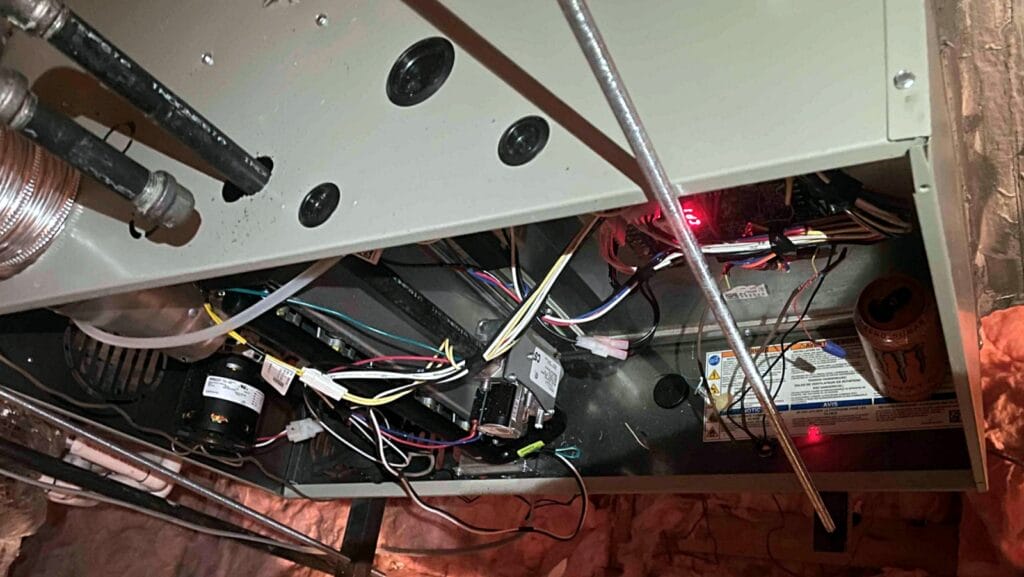
4. The Furnace Control Board Might Be Locked Out
Modern gas furnaces include safety systems that prevent operation if the system detects a problem.
After a power outage, the furnace’s control board may enter a safety lockout mode. This can happen if the system attempted to start during unstable power conditions.
A simple reset often fixes the problem:
- Turn off the furnace power switch.
- Wait about 30–60 seconds.
- Turn the power back on.
This allows the system to reboot and run through its startup sequence again.
5. The Pilot Light May Have Gone Out (Older Furnaces)
If your home has an older furnace with a standing pilot light, the outage or a gas interruption may have extinguished it.
Signs of this include:
- The furnace blower runs but no heat comes out
- You smell a faint gas odor near the unit
- The pilot flame is not visible
Relighting instructions are usually printed on the furnace panel, but if you’re unsure, it’s best to contact a professional technician.
6. Check the Furnace Air Filter
This might sound unrelated, but a severely clogged air filter can prevent a furnace from restarting properly.
When airflow is restricted, safety switches may shut the system down to prevent overheating.
Replace the filter if it looks dusty or hasn’t been changed in the last 1–3 months.
The U.S. Department of Energy recommends replacing furnace filters regularly to maintain efficiency and prevent system problems.
When You Should Call an HVAC Technician
If the furnace still won’t start after basic troubleshooting, professional service may be necessary.
Contact an HVAC technician if:
- The furnace repeatedly shuts off after starting
- You hear clicking but no ignition
- The breaker continues to trip
- The system shows error codes or flashing lights
Modern furnaces often display diagnostic codes on the control board that help technicians quickly identify the problem.
Final Thoughts
If your furnace won’t turn back on after a power outage, the cause is often something simple—like a tripped breaker, thermostat reset, or safety switch.
Before assuming the furnace is broken, check:
- The electrical breaker
- Furnace power switch
- Thermostat settings
- Air filter condition
- System reset
These quick checks can often restore heat in just a few minutes and save you an unnecessary service call.