
Introduction
If after cleaning mold the smell keeps coming back, you’re definitely not alone. Many homeowners scrub away visible mold, wipe down surfaces, and feel confident the problem is solved — only to notice that stubborn musty odor lingering days or weeks later.
This situation can be frustrating and confusing. You cleaned the mold, so why does the house still smell damp or stale? The truth is that mold odor often signals something deeper than what you can see on the surface.
In most cases, the smell returns because:
- hidden moisture is still present
- mold roots or spores remain inside materials
- porous surfaces absorbed the odor
- the original moisture source wasn’t fully addressed
The good news is that this is a very common issue, and with the right approach, it can usually be solved. Let’s break down why mold smell comes back — and what actually works to stop it for good.
Why mold smell returns after cleaning
Cleaning visible mold doesn’t always remove the underlying conditions that caused it. Mold is not just a surface problem — it grows into materials and thrives wherever moisture persists.
Here are the most common reasons mold odor keeps returning.
Mold roots remain inside materials
Mold grows using microscopic structures called hyphae, which penetrate into porous materials like drywall, wood, and fabrics. Even if you remove surface discoloration, parts of the growth may remain inside.
These hidden remnants can continue releasing odor compounds, creating that familiar musty smell after mold removal.
Cleaning removed mold but not moisture
Mold follows moisture. If a leak, condensation issue, or humidity problem remains, mold may start growing again quickly — even if you cleaned thoroughly.
Examples include:
- slow plumbing leaks
- poorly sealed windows
- condensation behind furniture
- inadequate bathroom ventilation
Without fixing the moisture source, cleaning alone is only temporary.
Porous materials absorb odor
Materials such as:
- drywall
- carpet
- insulation
- unfinished wood
can absorb mold odors deeply. Even after the mold itself is gone, the smell may linger because these materials act like sponges.
HVAC system spreading odor
Sometimes the musty smell isn’t coming from the original cleaning area anymore. Air ducts or filters can circulate residual odors throughout the home, making it feel like mold is everywhere.
High humidity environment
If indoor humidity stays above about 50–60%, moisture can remain trapped in surfaces. This environment allows odor compounds to linger and sometimes encourages new mold growth.
Common mistakes people make when cleaning mold
Many homeowners work hard to remove mold — but a few common mistakes can allow the smell to persist.
Using only bleach
Bleach is widely used, but it’s not always effective on porous materials. It may remove visible staining while leaving moisture behind, which can worsen the problem.
Cleaning without drying
This is one of the biggest issues.
Cleaning introduces more moisture. Without proper drying — using airflow, fans, or dehumidifiers — dampness can remain trapped inside materials.
Ignoring behind-wall moisture
Mold often grows where you can’t see it:
- inside drywall cavities
- behind cabinets
- under flooring
If moisture remains hidden, the smell will continue.
Masking smell instead of fixing the cause
Air fresheners, candles, or odor sprays may temporarily hide the musty smell, but they don’t eliminate the underlying source.
Poor ventilation during and after cleaning
Without airflow, humidity stays high, and odors linger longer.
Hidden places mold odor can come from
If you feel like you’ve cleaned everything visible but still notice a hidden mold smell, it may be coming from less obvious areas.
Check these common trouble spots:
- Under flooring — especially laminate or vinyl installed over damp subfloors
- Inside drywall — water leaks often travel behind walls
- HVAC ducts — dust and moisture can trap mold particles
- Under sinks — slow drips can go unnoticed for months
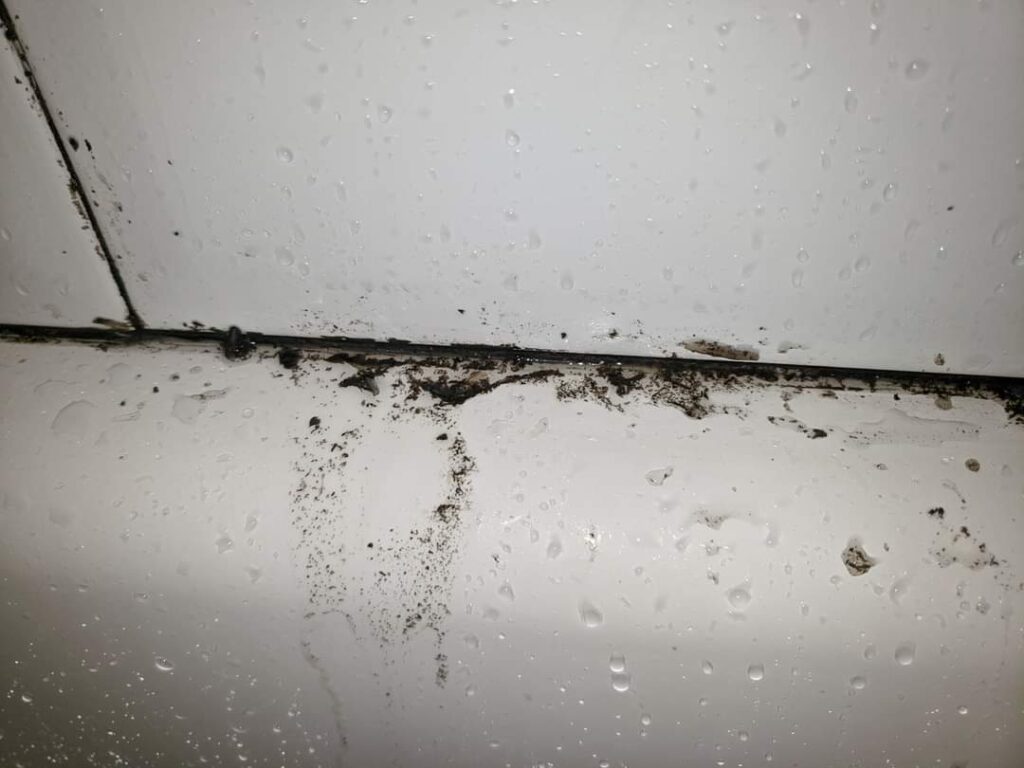
- Bathroom grout or silicone seals — tiny cracks can harbor growth
- Basement corners — poor airflow and cooler temperatures trap moisture
Using your nose can actually help — walk slowly around and notice where the smell feels strongest.
How to actually remove mold smell permanently
If the mold odor keeps returning, shift your focus from cleaning to solving the environment that allowed mold to grow.
Here’s a practical step-by-step approach.
1. Find and fix the moisture source
This is the most important step.
Look for:
- leaks (visible or hidden)
- condensation on windows or pipes
- damp walls or floors
- areas with poor airflow
Fixing moisture stops the cycle.
2. Dry everything completely
Even slightly damp materials can hold odor.
Use:
- fans
- dehumidifiers
- open windows when weather allows
Aim for indoor humidity around 40–50%.
3. Remove contaminated materials if needed
Sometimes cleaning is not enough.
Materials that may need replacement:
- heavily affected drywall
- soaked insulation
- carpet padding
This sounds drastic, but removing the odor source can make a huge difference.
4. Clean with appropriate solutions
Instead of relying solely on bleach, many people find success with:
- vinegar-based solutions
- specialized mold cleaners
- mild detergents followed by thorough drying
Always test products on small areas first.
5. Improve airflow
Good airflow reduces humidity and prevents odor buildup.
Simple steps include:
- leaving space between furniture and walls
- using exhaust fans regularly
- opening interior doors for circulation
6. Use a dehumidifier if necessary
In humid climates or basements, a dehumidifier can be one of the most effective tools for preventing mold odor from returning.
Is the smell dangerous even if mold isn’t visible?
A lingering musty smell doesn’t always mean active mold growth — but it does suggest that moisture or past mold activity is present somewhere.
Potential concerns include:
- ongoing hidden mold growth
- trapped moisture that could lead to future problems
- reduced indoor air quality
You don’t need to panic. However, a persistent mold odor should be treated as a signal to investigate further rather than ignore.
When to call a professional
DIY methods work for many situations, but sometimes professional help makes sense.
Consider calling a specialist if:
- the smell persists for several weeks despite cleaning
- you notice recurring moisture problems
- mold may be inside structural areas or HVAC systems
- multiple rooms are affected
- household members feel discomfort or symptoms when indoors
Professionals can use moisture meters, thermal cameras, and other tools to locate hidden issues.
Prevention tips to stop mold smell from returning
Once you solve the immediate problem, prevention becomes key.
Helpful habits include:
- Keeping indoor humidity below 50%
- Running bathroom fans during and after showers
- Fixing leaks immediately
- Regularly inspecting under sinks and around windows
- Improving airflow in closets and corners
- Avoiding blocking vents with furniture
Think of mold prevention as moisture management rather than constant cleaning.
FAQ
Why does mold smell linger after cleaning?
Even after cleaning, odor can remain because mold roots or spores are still inside materials, or because moisture hasn’t been fully removed.
Can mold smell stay without mold?
Yes. Porous materials can absorb odor compounds, creating a musty smell even after mold is gone. However, it’s important to confirm that hidden mold isn’t still present.
Does vinegar remove mold odor permanently?
Vinegar can help neutralize odor and clean some surfaces, but permanent results depend on eliminating the moisture source and drying thoroughly.
How long should mold smell last?
A mild smell may linger briefly after cleaning, but it should fade within days if the area is fully dry. If it persists or worsens, further investigation is needed.
after cleaning mold the smell keeps coming back — what should I check first?
Start by checking for hidden moisture. Look for leaks, condensation, or high humidity, since unresolved moisture is the most common reason mold odor keeps returning.
Conclusion
If after cleaning mold the smell keeps coming back, it doesn’t mean you failed — it usually means the real source of moisture or contamination hasn’t been fully addressed yet.
Instead of repeatedly cleaning surfaces, focus on finding hidden moisture, drying materials thoroughly, improving airflow, and removing anything that continues to hold odor. Mold smell is less about dirt and more about environment.
Once you shift your approach from cleaning alone to moisture control, the musty odor becomes much easier to eliminate — and much less likely to return.