
Introduction
You clean your washing machine expecting a fresh, neutral smell.
The cycle finishes, you open the door — and instead of freshness, washing machine smells sour after cleaning.
This situation is more common than it seems.
And in most cases, it does not mean that something went wrong or that the cleaning “failed.”
A sour smell appearing after cleaning often reflects how the machine reacts to disturbance, moisture, and loosened buildup. It’s usually temporary and understandable once you know what’s happening inside.
The goal of this article is to calm concerns, explain why this smell can appear after cleaning, and help you decide whether it’s a normal short-term effect or something worth paying attention to.
What Likely Happened
Cleaning doesn’t instantly reset a washing machine to a “brand new” state.
Over time, small amounts of detergent residue, fabric particles, and moisture settle in different parts of the machine. When you run a cleaning cycle, those deposits don’t disappear at once — they loosen, shift, and move.
At the same time, cleaning introduces warmth and moisture, which can temporarily intensify odors that were already present but unnoticed.
This combination — loosened residue, moisture, and airflow changes — can create a sour or stale smell shortly after cleaning. Some parts of the machine respond more slowly than others, so the effect may appear after the cycle rather than during it.
In short:
Cleaning is an intervention, and interventions can briefly change how things smell before they improve.
Most Common Reasons This Happens
Residue Loosened but Not Fully Flushed
Cleaning often breaks down old buildup. That material may linger for a short time before being fully rinsed away. While it’s in motion, it can release odors that were previously “locked in.”
Moisture Trapped After Cleaning
A cleaning cycle usually uses hot water or steam. If moisture remains in hidden areas afterward, it can create a damp smell until everything dries out evenly.
Rubber Seal Retaining Odor
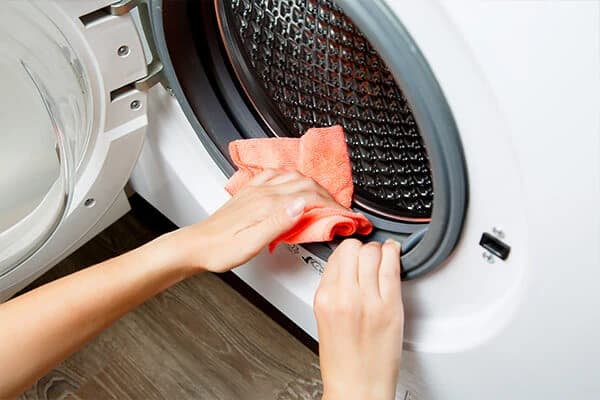
The rubber door seal is designed to flex and hold water. When cleaning disturbs residue in that area, smells can become more noticeable for a while before fading.
Drain or Filter Holding Released Debris
During cleaning, debris may move toward drainage areas. Until it fully clears, a temporary odor can appear, especially right after the cycle ends.
Machine Closed Too Soon After Cleaning
When the door is closed immediately after a warm, wet cycle, air circulation is limited. This can trap humidity and make existing odors more noticeable for a short period.
None of these reasons automatically signal a problem. They describe normal reactions inside a system that’s just been disturbed.
How Long the Smell Usually Lasts
In most cases, a sour smell after cleaning lasts from a few hours up to a couple of days.
What matters most is not the smell itself, but the direction it’s going.
- A smell that slowly fades is usually part of the normal post-cleaning process.
- A smell that becomes stronger, sharper, or more persistent deserves attention.
Think in terms of trend, not momentary discomfort. Washing machines don’t always smell better immediately — sometimes freshness appears gradually.
What You Can Observe Safely Right Now
Without doing anything active, you can learn a lot just by paying attention.
- Does the smell feel weaker each time you notice it?
- Is it strongest right after a wash and less noticeable later?
- Does the odor seem to disappear when the door is open?
- Is there visible moisture around the door seal after cleaning?
- Does the smell appear only after cleaning, not during regular use?
These observations help you understand whether the machine is simply drying and settling — or whether the situation is staying the same.
No action is required at this stage. Observation alone often brings clarity.
When This Is Normal — And When It’s Not
Usually normal if:
- The smell appeared soon after cleaning
- It gradually becomes less noticeable
- There are no new symptoms
- The machine otherwise behaves as usual
This pattern suggests a temporary reaction to moisture and loosened residue.
Not normal if:
- The smell intensifies over time
- It remains unchanged for several days
- It appears during every wash, not just after cleaning
- It’s accompanied by unusual noises, leaks, or performance changes
In these cases, the smell isn’t just a post-cleaning effect — it’s a signal that something else may be going on.
Is It Safe to Keep Using the Washing Machine?
In most situations, yes.
A sour smell by itself does not indicate danger. Temporary odors after cleaning are common and usually harmless.
If the smell is fading and there are no additional signs, continued normal use is generally fine. There’s no need to panic or assume immediate risk.
However, if the odor becomes stronger or is paired with other unusual behavior, pausing and observing is a reasonable choice — not because of urgency, but to avoid ignoring a pattern.
When to Consider Professional Help
This is rarely urgent.
Professional help makes sense when:
- The smell doesn’t improve after several days
- It becomes a consistent feature of every wash
- You notice other changes in how the machine works
A professional evaluation is about diagnosis, not automatic repair. Often, understanding what’s happening is enough to decide on next steps calmly.
Seeking help doesn’t mean something is seriously wrong — it means you want clarity.
How to Reduce the Chances of This Happening Again
Without turning cleaning into a complicated project, a few general principles help:
- Allow the machine time to dry after cleaning
- Expect gradual improvement rather than instant freshness
- Notice how your machine typically reacts after maintenance
- Remember that cleaning is a process, not a reset button
Understanding these patterns makes future reactions feel less surprising — and less stressful.
Conclusion
A sour smell after cleaning a washing machine is often temporary and understandable. It usually reflects loosened residue, moisture, and delayed responses inside the appliance — not a failed cleaning or a hidden problem.
What matters most is observation. A fading smell is normal. A worsening one deserves attention.
Staying calm, watching how the situation develops, and resisting rushed conclusions leads to better decisions.
Understanding how appliances respond after cleaning helps you decide what to do next calmly and confidently.