
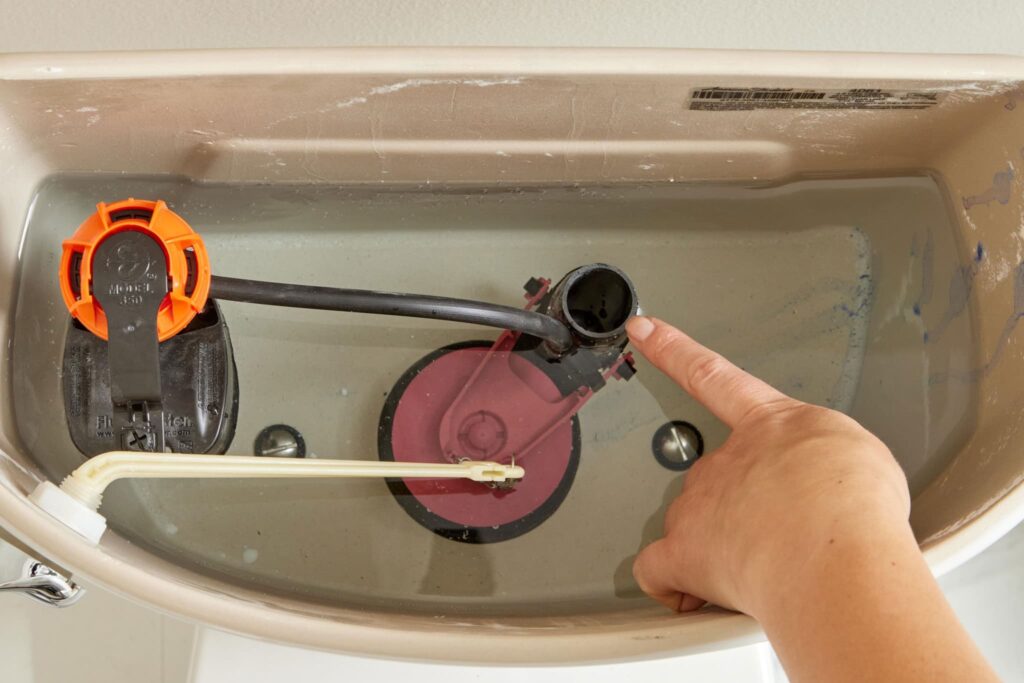
Replacing parts inside a toilet is usually done for one simple reason: something wasn’t working as smoothly as it should. Maybe the toilet was noisy, slow to fill, or running occasionally. You changed a component expecting improvement — quieter operation, better control, a sense of “problem solved.”
Then you flush… and the water keeps running.
Not loudly enough to look like a disaster, but enough to be noticeable. Enough to trigger doubt. The first thought for many people is uncomfortable and immediate: Did I make it worse?
This reaction is completely understandable. But the situation itself is far more common — and far less alarming — than it feels in the moment.
After replacing toilet parts, water keeps running in many perfectly ordinary situations. It does not automatically mean something is broken, defective, or incorrectly handled.
What Likely Happened
A toilet may look simple from the outside, but inside it functions as a carefully balanced system. Water pressure, flow timing, component movement, and shutoff points all work together in a very specific relationship.
When you replace a part, even a single one, you are not just swapping an object — you are changing how that system behaves.
Think of it less as “fixing a broken piece” and more as intervening in a calibrated process. The system now has to respond to something new: a different shape, weight, flexibility, or movement pattern.
This is why a toilet keeps running after repair more often than people expect. The running itself is not always a sign of failure. In many cases, it’s a sign that the system is reacting to change.
Continuous running does not always mean something is wrong — often, it means the system is adjusting.
Why Water May Keep Running After Parts Are Replaced
There are several common, non-dramatic reasons why water continues to flow after maintenance. None of them imply blame, mistakes, or damage.
Components Settling Into Position
New parts behave differently than old ones. Even when they are designed to replace an existing component, they may move, flex, or respond to water pressure in a slightly different way.
In the first hours — sometimes longer — parts may not behave exactly as expected. This can result in toilet running after replacing parts, even though nothing is actually failing.
Water Level Behavior Changed
A toilet’s internal water level is sensitive. A very small change can make the system refill more often or longer than before.
After replacement, the water may reach a slightly different stopping point. That difference can cause ongoing flow that feels constant, even if it is technically mild or cyclical.
This is one of the most common reasons water keeps running in toilet after replacement without any other visible issues.
Old and New Parts Interacting
Often, only one component is replaced. That means new parts must interact with older ones that have been in place for years.
Those older components may respond differently to the movement or timing of the new part. The interaction itself — not the condition of either part — can produce continued running.
This is especially relevant when people notice a toilet still running after replacing flapper or similar internal components.
Alignment or Balance Not Yet Stabilized
Toilets are surprisingly sensitive to small changes in balance and alignment. A shift that seems insignificant can affect how water shuts off or continues to flow.
After maintenance, the system may behave consistently — but differently than before. Consistency does not always mean correctness, but it also does not mean danger.
Expectations vs. Reality
Many people expect silence immediately after replacing parts. When that expectation isn’t met, the contrast makes the situation feel worse than it is.
In reality, a running toilet after maintenance is often more about unmet expectations than actual malfunction.
Why This Often Feels More Alarming Than It Is
The sound of running water triggers concern almost instantly. It’s associated with waste, cost, and potential damage — even when none of those are actually happening.
There’s also a strong psychological factor at play: timing.
Because the water started running after you did something, it feels like cause and effect. That makes the issue feel personal, even when the situation itself is common.
After taking action, people tend to notice every change more intensely. A sound that might have gone unnoticed before now feels louder, more constant, and more threatening.
The timing makes it feel serious — even when the situation itself is routine.
How Long This Situation Usually Lasts
There is no single timeline that applies to every toilet, every replacement, or every household. However, certain patterns are very common.
In some cases, the running stops almost immediately. In others, it may persist for hours. Sometimes, it becomes noticeable only after repeated use.
What matters most is not the first few minutes, but what happens over time.
Trend matters more than the initial behavior.
If the situation remains stable — not worsening, not changing dramatically — that stability itself is meaningful information.
What You Can Observe Safely Right Now
You don’t need to take action to gain clarity. Simple observation can tell you a lot without risk.
You might notice:
- Whether the water runs constantly or in cycles
- If the sound changes over time
- Whether it behaves the same after each flush
- If the flow remains steady or gradually increases
- Whether anything feels different from one use to the next
These observations help separate temporary system response from developing issues.
Observation provides information without risk.
When This Is Normal — And When It’s Not
Usually Normal If:
- The running started immediately after parts were replaced
- The behavior is consistent and predictable
- Nothing else has changed or worsened
- The situation feels stable rather than escalating
Many cases of toilet running after replacing parts fall into this category.
Not Normal If:
- The flow becomes stronger over time
- New or unusual sounds appear
- The behavior changes unpredictably
- The situation clearly worsens instead of stabilizing
The key factor is not whether water is running — but whether the situation is changing.
Change over time matters more than the fact that water is running.
Is It Wasteful or Dangerous?
This is another common worry — and an important one to address calmly.
A running toilet is usually not an emergency. Continuous flow does not automatically mean flooding, damage, or immediate danger.
There is a difference between something being annoying and something being hazardous.
That said, it’s also reasonable not to ignore the situation indefinitely. The goal is not panic — it’s awareness.
Running water is often a signal, not a threat.
When to Consider Professional Help
Seeking professional input does not mean failure, urgency, or danger. In many cases, it’s simply about reassurance.
You might consider it if:
- The situation does not change over time
- You feel unsure and tired of second-guessing
- You want confirmation rather than speculation
This is not about emergency response. It’s about clarity and peace of mind.
Conclusion
You took a logical step to improve how your toilet functions. The system reacted — as systems often do when something changes.
In most cases, after replacing toilet parts, water keeps running not because something is broken, but because the system is responding to a new balance.
Understanding what changed after replacement helps you decide what to do next — calmly and confidently.