
Introduction
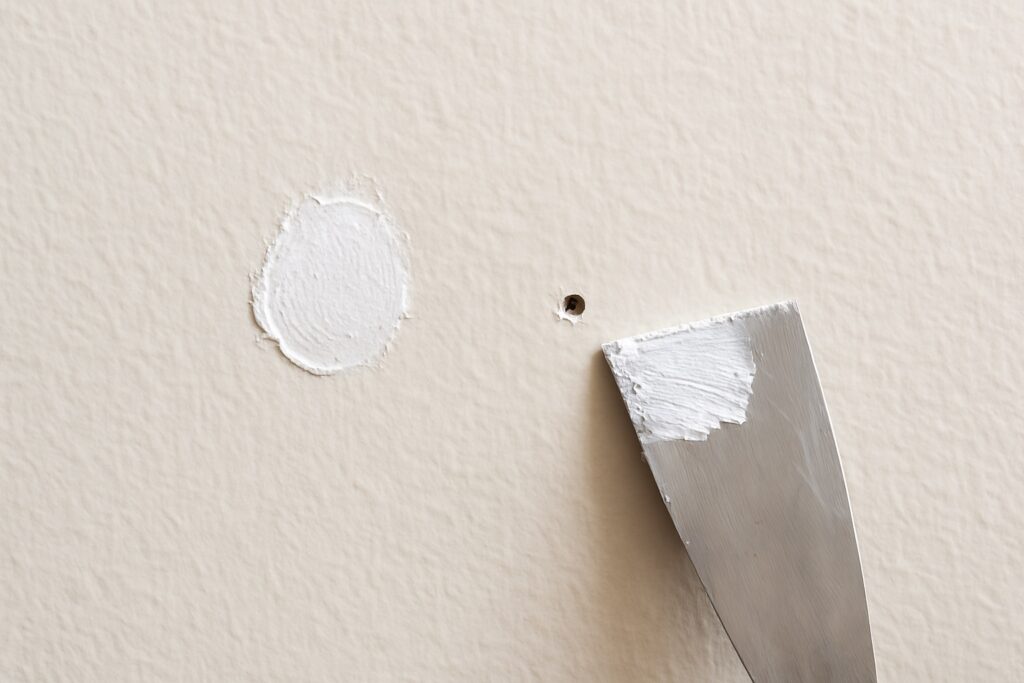
If after wall repair paint dries unevenly, you’re definitely not the only one dealing with this. Many homeowners finish patching a wall — filling holes, repairing drywall, smoothing cracks — only to step back after painting and notice patchy areas, uneven sheen, or spots that look darker or lighter than the rest of the wall.
It can feel discouraging, especially when the repair itself looked smooth before painting. The good news is that this is a very common issue and usually doesn’t mean you did anything seriously wrong.
Most uneven paint results come down to a few predictable causes:
- repaired areas absorb paint differently
- primer was skipped or insufficient
- surface texture isn’t fully uniform
- drying conditions affected the finish
Once you understand why it happens, fixing it becomes much easier — often without repainting everything from scratch.
Why paint dries unevenly after wall repair
Paint behaves differently depending on the surface underneath. When part of a wall is repaired, you’re essentially painting over two different materials at once.
Here are the main reasons uneven results happen.
Different surface porosity
Joint compound, filler, or fresh drywall absorbs paint more than existing painted surfaces.
This creates:
- dull or matte-looking patches
- uneven paint sheen
- areas that appear darker or lighter.
This difference in absorption is one of the most common wall repair painting problems.
Joint compound vs original wall surface
Original painted walls typically have a sealed surface. Fresh patches do not.
Without sealing the patch first:
- paint soaks in faster
- coverage becomes inconsistent
- repaired areas stand out visually.
Improper sanding
Even if the patch feels smooth to the touch, small texture differences can catch light differently.
Uneven sanding may cause:
- visible edges around patches
- subtle ridges
- inconsistent reflections.
Moisture still inside repair area
If painting starts before the patch fully dries, trapped moisture can affect paint curing.
Signs include:
- blotchy appearance
- uneven drying speed
- sheen inconsistencies.
Paint application technique
Overworking the paint, inconsistent roller pressure, or overlapping strokes incorrectly can also create uneven results.
The most common mistakes after wall patching
Many patchy paint after repair situations come from small preparation oversights.
Skipping primer
Primer is often the missing step.
Without it:
- patched areas absorb paint unevenly
- color may look inconsistent
- sheen differences become visible.
Using the wrong roller nap
A roller that’s too smooth or too thick can create texture differences compared to the rest of the wall.
Painting before patch fully dries
Even if the surface feels dry, deeper layers may still hold moisture.
Overworking the paint
Going over the same area repeatedly while paint is drying can:
- create uneven coverage
- leave roller marks
- cause flashing.
Uneven sanding
Failing to feather the edges of the repair smoothly into the surrounding wall makes patches more visible under certain lighting.
Patch flashing explained (simple language)
One of the most frustrating effects after wall repairs is called “flashing.”
Drywall patch paint flashing happens when repaired areas reflect light differently than surrounding paint.
Why?
- Patches absorb paint differently.
- Paint sheen reacts differently on sealed vs unsealed surfaces.
Even when the color matches perfectly, the reflection may look uneven.
This is why repaired spots often become more noticeable when sunlight hits the wall from an angle.
How to fix uneven paint without repainting everything
Before assuming you need to redo the entire wall, try these practical steps.
1. Let paint fully cure
Fresh paint can look uneven while drying.
Wait:
- at least 24–48 hours
- longer in humid conditions.
Some uneven areas soften or blend once fully cured.
2. Light sanding
If texture differences are visible:
- use fine-grit sandpaper (220 grit)
- lightly smooth patch edges
- avoid sanding through paint layers.
3. Spot prime repaired areas
Apply primer only to the patch.
Benefits:
- seals porous surface
- evens out absorption
- improves consistency for next coat.
Allow primer to dry fully.
4. Apply an additional coat evenly
Use:
- consistent roller pressure
- long, smooth strokes
- “W” or “M” pattern followed by light finishing passes.
Avoid going back over partially dried areas.
5. Feathering technique
Blend edges outward from the patch into surrounding wall to minimize visible transitions.
When you actually need to repaint the entire wall
Sometimes spot fixes aren’t enough.
Consider repainting the full wall if:
- patches are large or numerous
- uneven paint sheen is obvious across lighting angles
- color differences remain after additional coats
- strong side lighting highlights texture variations.
Painting the entire wall ensures consistent finish and reflection.
Drying conditions that affect paint results
Environment plays a bigger role than many people realize.
Humidity
High humidity slows drying and may cause uneven curing.
Temperature
Very cold or hot rooms affect paint leveling.
Ideal range:
- around 65–75°F (18–24°C).
Airflow
Good airflow helps even drying, but strong direct airflow can create streaking.
Paint quality
Higher-quality paints often:
- level better
- hide patches more effectively
- produce more consistent sheen.
Prevention tips for future wall repairs
Avoiding uneven paint is easier with proper preparation.
- Always prime repaired areas.
- Sand patches smooth and feather edges.
- Use the same roller type used previously.
- Check wall under angled lighting before painting.
- Test paint on a small area first.
- Apply at least two thin coats rather than one heavy coat.
Consistency in preparation matters more than painting technique alone.
FAQ
Why does repaired wall look patchy after painting?
Usually because patched areas absorb paint differently or weren’t primed, creating uneven sheen or color appearance.
Do I always need primer after wall repair?
In most cases, yes. Primer seals porous materials like joint compound and helps paint dry evenly.
Will uneven paint fix itself after drying?
Sometimes minor differences improve as paint cures, but significant flashing or texture issues usually need an additional coat or spot priming.
How many coats after drywall repair?
Typically one primer coat and two paint coats give the best results.
after wall repair paint dries unevenly — what should I do first?
Start by letting the paint fully cure, then inspect under good lighting. If patches remain visible, lightly sand, spot prime, and apply another even coat.
Conclusion
If after wall repair paint dries unevenly, it’s usually caused by differences in surface porosity, lack of proper priming, or small texture variations — not a major mistake or permanent problem.
Uneven drying and patch flashing are common when painting over joint compound or repaired drywall. With a little patience, spot priming, light sanding, and an additional well-applied coat, most walls can achieve a smooth, consistent finish without starting over completely.
Focus on sealing repaired areas and maintaining even application, and future repairs will blend much more easily into the surrounding wall.