
Introduction
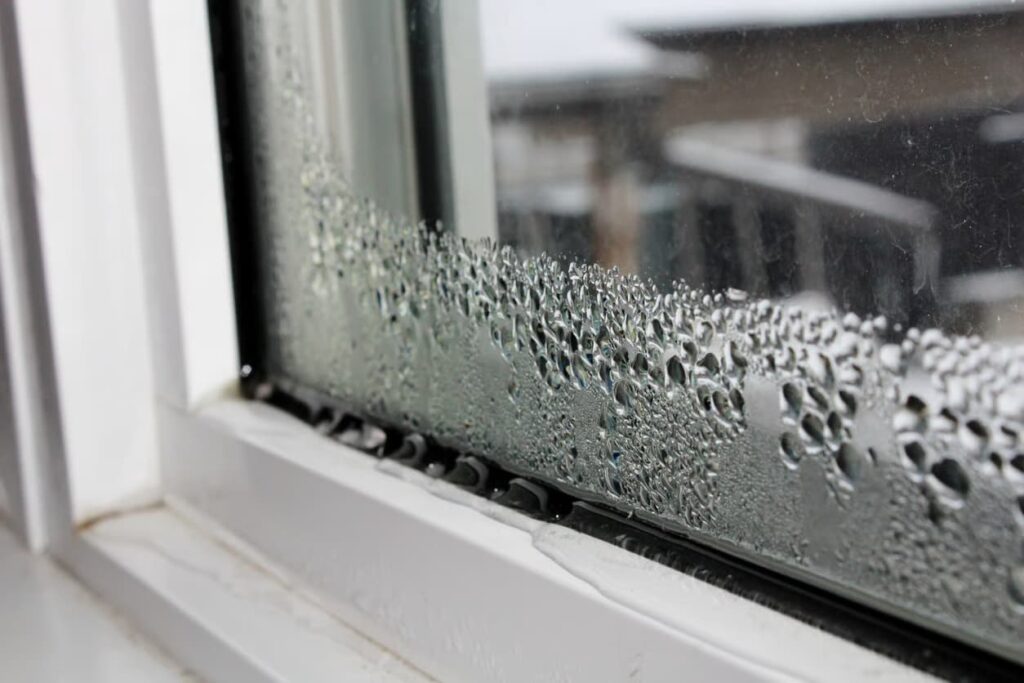
Installing new windows usually comes with clear expectations: better insulation, more comfort, and fewer issues with drafts and moisture. That’s why it can be unsettling to notice that condensation increased after installing new windows — sometimes even more than before.
This situation is surprisingly common. Many homeowners experience it shortly after an upgrade and immediately wonder:
- Aren’t new windows supposed to prevent this?
- Was something installed incorrectly?
- Did we make things worse instead of better?
In most cases, the answer is reassuring: increased condensation after new windows does not automatically mean something went wrong. It is often the result of changed conditions inside the home, not a defect or failure.
What Likely Happened
New windows don’t just “improve insulation.” They change how air and moisture behave inside your home.
Older windows were usually less airtight. Even without realizing it, they allowed small amounts of air to move in and out. This unintended airflow often carried moisture away with it.
New windows are designed to be much more airtight. As a result:
- Less air escapes
- Less outdoor air enters
- Moisture that used to leave the home now stays inside longer
Condensation, in this context, is a reaction to a new balance, not a sign of poor-quality windows or improper installation.
Most Common Reasons Condensation Increased After New Windows
Several normal factors often come together after window replacement:
- 🔹 Reduced air leakage
The home is now better sealed than before. - 🔹 Higher indoor humidity staying inside
Everyday moisture has fewer paths to escape. - 🔹 Warm indoor air meeting cooler glass surfaces
Especially noticeable during colder weather. - 🔹 Seasonal timing
Many installations happen just before or during the colder months, when condensation is naturally more visible. - 🔹 Adjustment after changes to the building envelope
Any major upgrade shifts how the home behaves as a system.
The key point: condensation is a visible effect of change, not a newly created problem.
Why This Happens More After “Upgrades”
It can feel paradoxical: you improved your home, yet something seems worse.
Upgrades increase control — over temperature, air movement, and energy use. But with that control comes a period of adaptation. The home becomes a more closed system, and moisture patterns become easier to see.
In this sense, condensation is not a malfunction. It’s an indicator that conditions inside the home have shifted.
How Long Increased Condensation Usually Lasts
In many cases, increased condensation is temporary.
It may reduce over time as:
- Indoor temperatures stabilize
- Seasonal conditions change
- Daily household patterns naturally adjust
What matters most is not whether condensation exists, but how it behaves over time.
What matters most is whether condensation is increasing, stable, or gradually decreasing.
A steady or declining trend is often a sign that the home is settling into its new balance.
What You Can Observe Safely Right Now
Without taking any action or making changes, simple observation can be helpful:
- Where exactly does condensation appear?
- Does it happen all day or only at certain times?
- Does it disappear on its own later in the day?
- Is it limited to window glass, or visible elsewhere?
This kind of awareness helps shift focus from worry to understanding.
When This Is Normal — And When It’s Not
✅ Usually normal if:
- Condensation appeared soon after installation
- It’s more noticeable during colder weather
- It does not worsen over time
🚨 Not normal if:
- Water constantly runs or pools
- Mold begins to appear
- Walls feel damp or affected
- The situation steadily worsens
These signs suggest the situation may need closer attention, rather than simple adjustment.
When to Consider Professional Help
This is rarely urgent or an emergency.
Seeking professional input in these cases is about clarity, not crisis.
Asking questions can help you understand how the new windows changed airflow and moisture balance — not because something failed, but because the system is now different.
Seeking professional input is about understanding the new balance, not fixing a failure.
Conclusion
Condensation after window replacement is often an expected and explainable outcome. New windows change how a home manages air and moisture — they don’t automatically create problems.
Observation is usually more valuable than quick conclusions, and understanding the reason behind the change helps replace anxiety with confidence.
Understanding what changed after installation helps you respond calmly instead of assuming something went wrong.